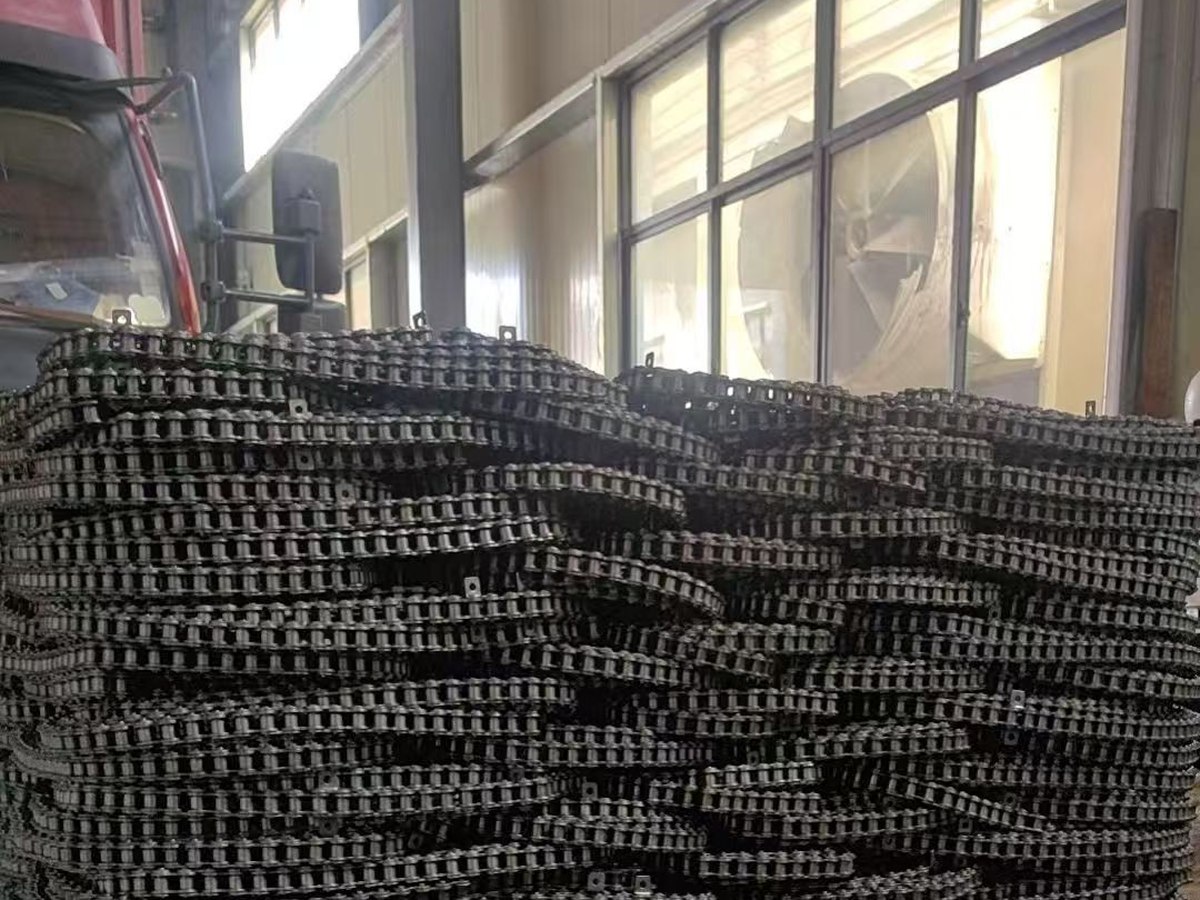
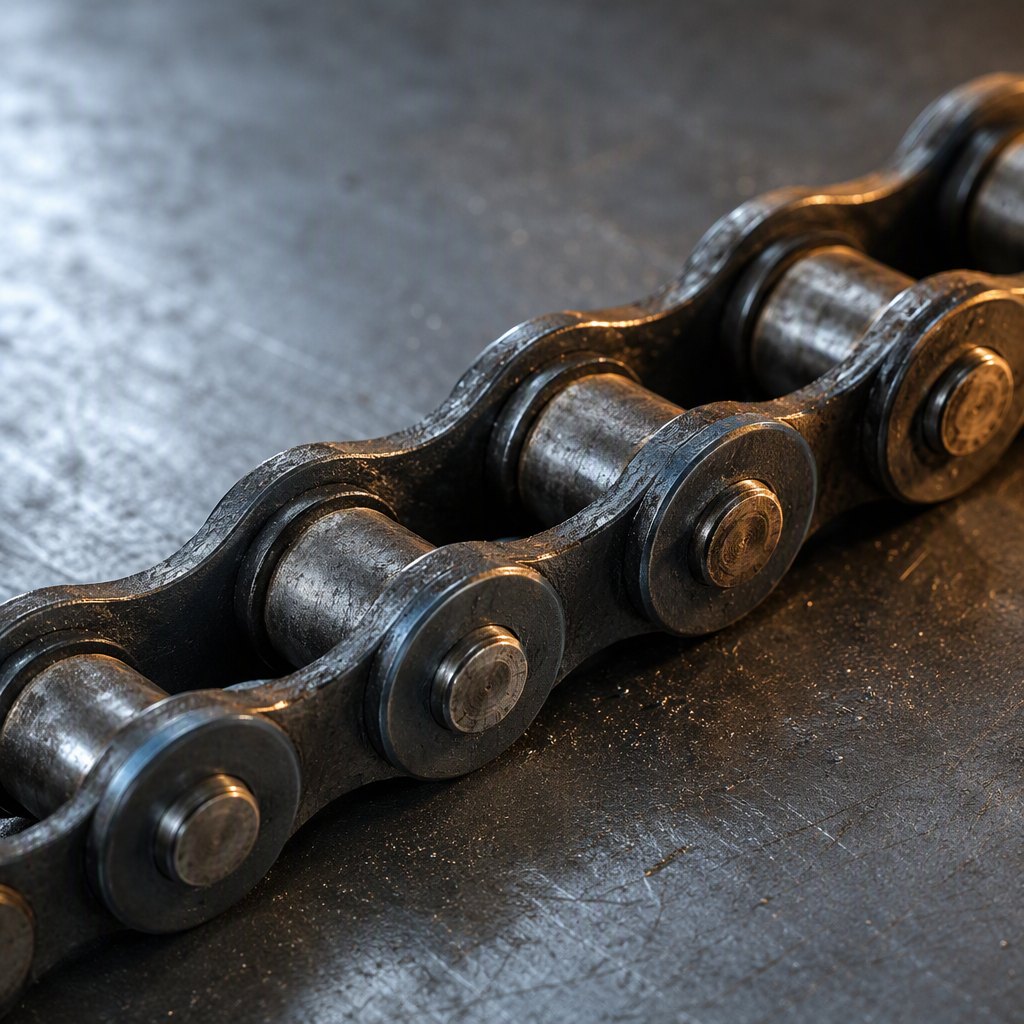
Most chain failures are not sudden. Long before a link cracks or a pin seizes, the chain has already told you it is worn: the pitch has grown, and it no longer sits correctly in the sprocket. That measurable change is called elongation.
What elongation actually measures
A roller chain does not stretch like a rubber belt. Elongation is cumulative wear. Material is lost from the pins and bushings, clearances open up, and every pitch grows slightly. Across a hundred pitches the growth becomes easy to measure, and hard to ignore.
How to measure it in three steps
- Clean and tension. Wipe the chain down, then apply normal working tension. A slack chain always measures short.
- Pick a span. Measure over at least ten pitches, twenty is better. Short spans multiply measurement error.
- Compare against nominal. Nominal span equals pitch multiplied by the number of pitches. Elongation percentage is measured minus nominal, divided by nominal, times one hundred.
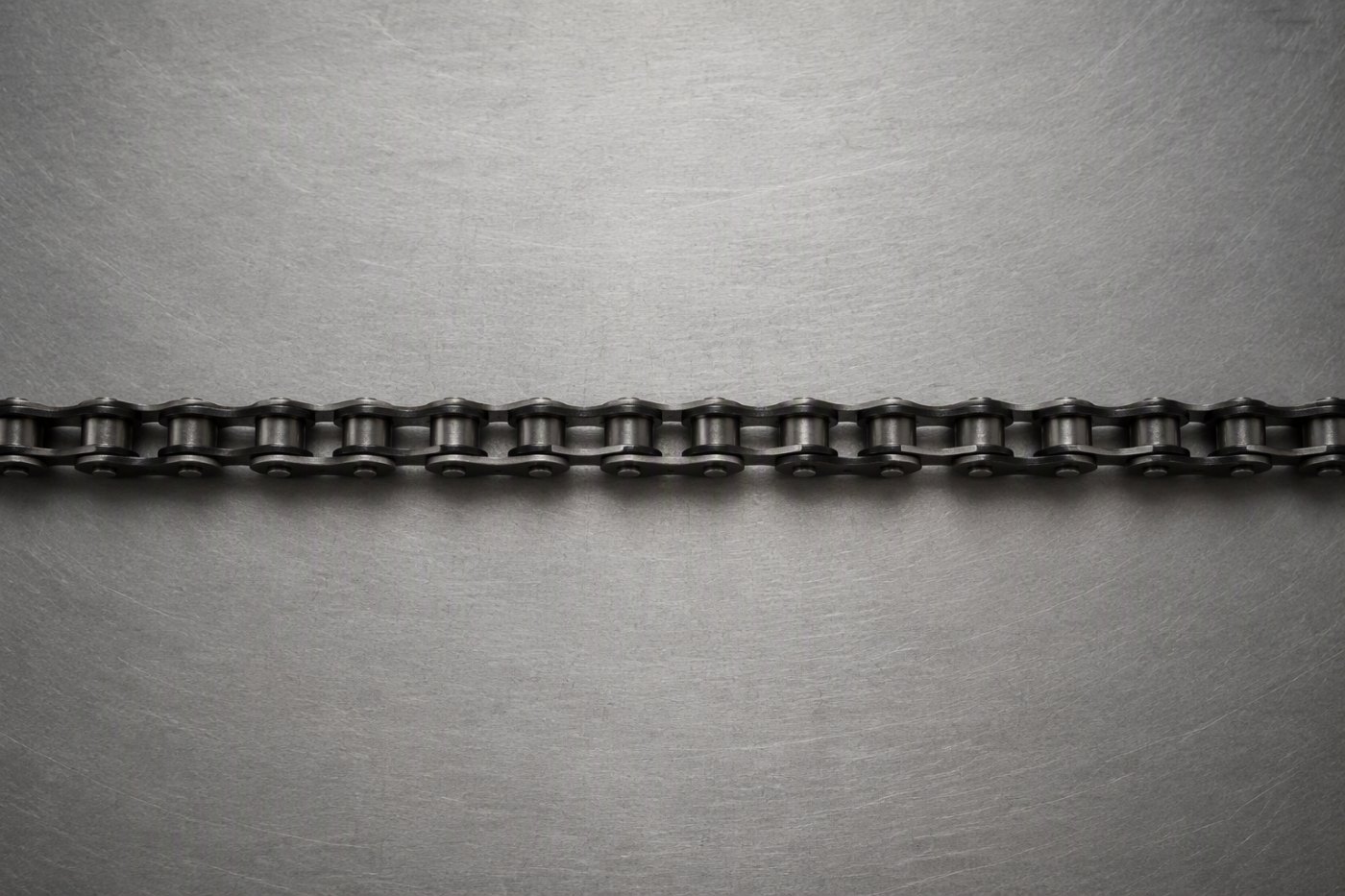
Measure between pin centres, not across the outside of the rollers. Reading the roller edges adds the roller diameter to your result and makes a sound chain look worn.
Reading the number
| Elongation | Condition | Action |
|---|---|---|
| Under 0.5% | Normal running wear | Continue, re-check at the next service interval |
| 0.5 to 1.0% | Wear is measurable | Monitor and plan a replacement window |
| 1.0 to 1.5% | Worn | Order a replacement; re-tensioning no longer helps |
| Over 1.5% | Worn out | Replace before further operation |
These thresholds are the widely used industry guide for general drive applications. Conveyor and hoist duty often tolerates more, while high-speed and reversing drives usually tolerate less. Confirm the limit for your specific application before scheduling a shutdown.
Why a worn chain damages more than itself
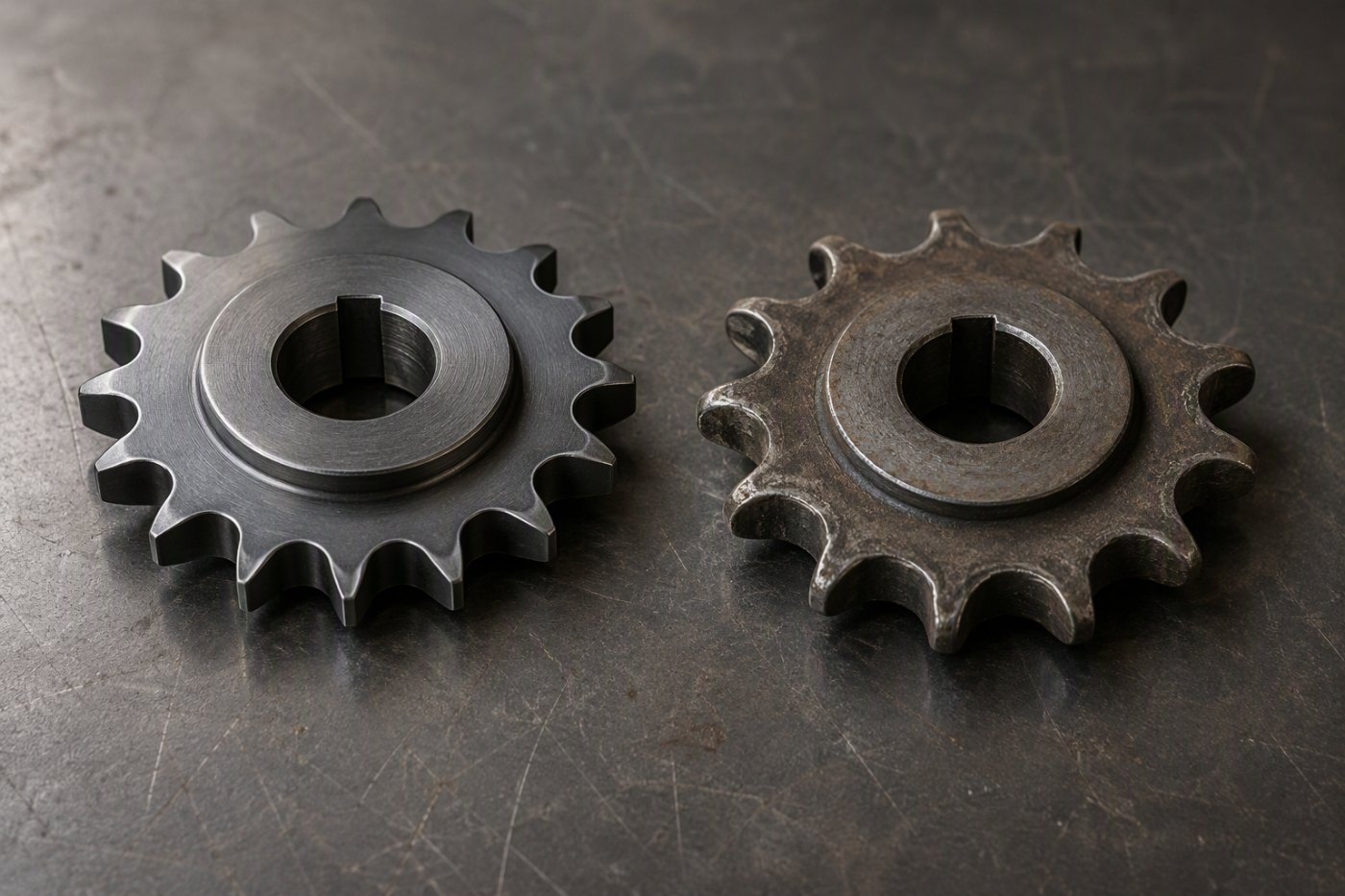
- Elongated pitch rides higher on the sprocket teeth, so fewer teeth carry the load.
- Sprocket teeth wear into a hooked profile, and a new chain on a worn sprocket wears out quickly.
- Shock loading rises, which is what actually breaks pins and side plates.
- Vibration and noise increase, and nearby seals and bearings take the extra load.
When re-tensioning is the wrong answer
Re-tensioning only removes slack. It does not restore pitch, and over-tensioning adds bearing load and accelerates pin wear. If the chain measures beyond the replacement threshold, tightening it only moves the failure closer.
Measuring is cheaper than guessing
A caliper and five minutes at each service interval tell you more than a visual inspection ever will. If you are not sure which chain you are running, start with our guide on how to measure roller chain pitch, then confirm the standard family with ANSI vs ISO (BS/DIN) roller chains.
UIB manufactures roller chains and conveyor chains in carbon steel, stainless steel and nickel-plated executions, including non-standard and customized configurations. Send us your pitch, strand count and duty, and we will confirm the specification.
Request a quote, we reply within one business day.