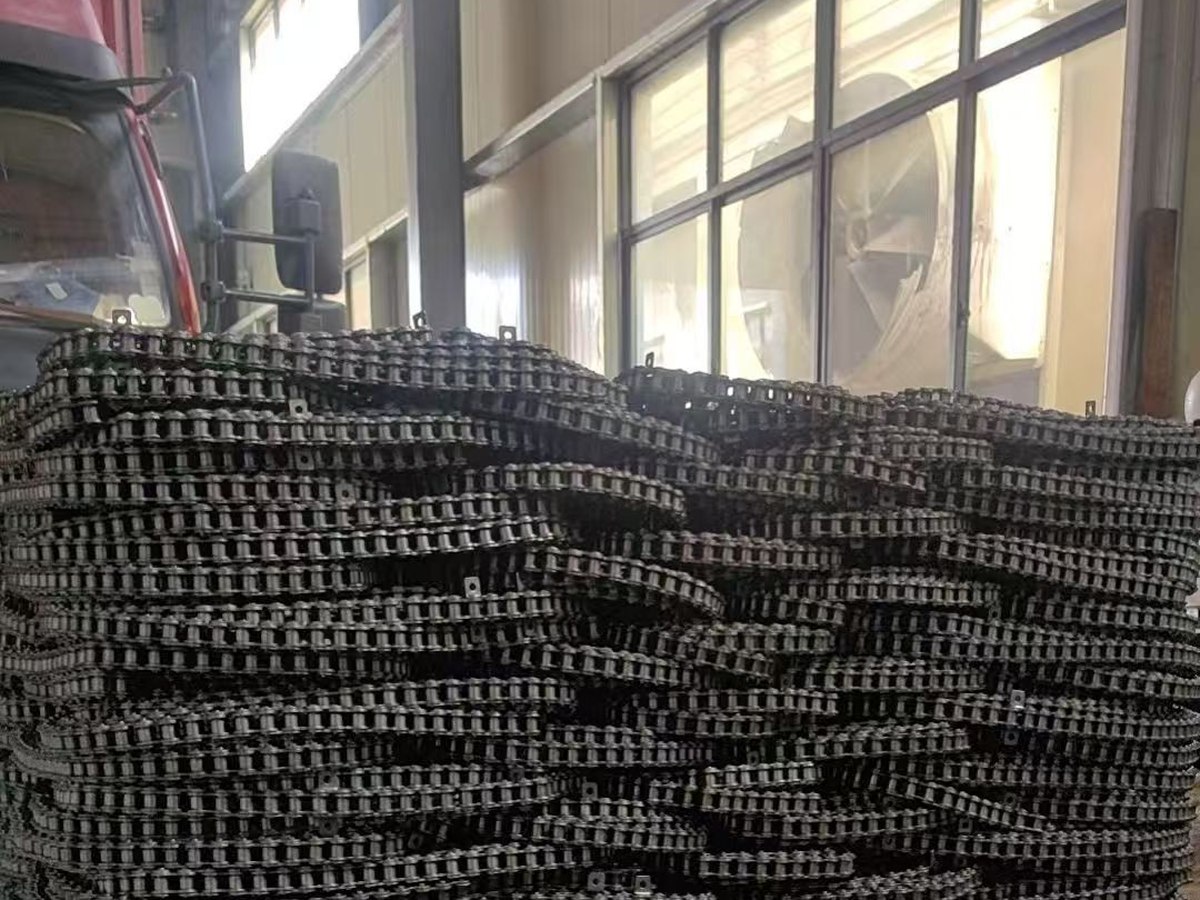
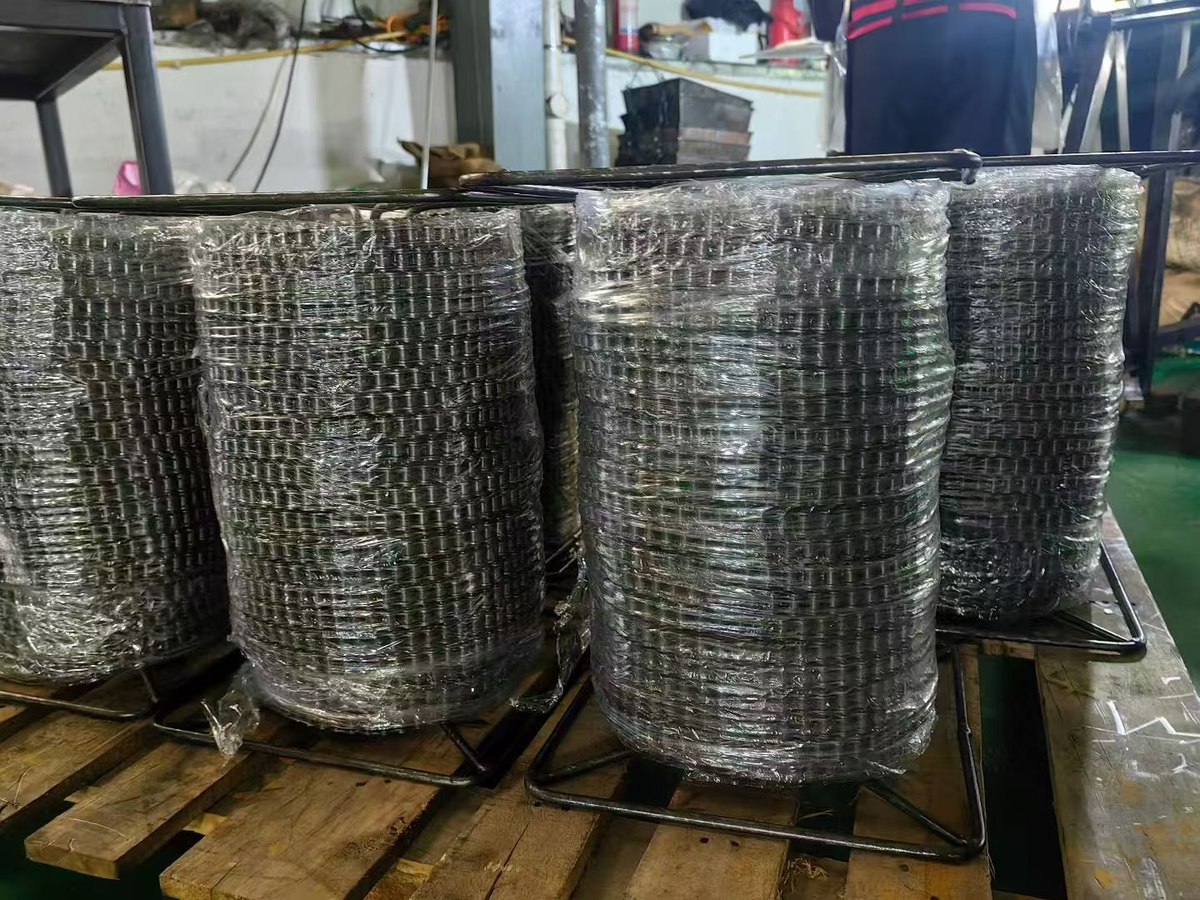
An export order of industrial roller chain leaves the works as palletised loads rather than as loose boxes: chain coiled to the ordered length, wound into a wire basket where the coil is heavy, wrapped, and stacked so a forklift can move it without the coil shifting on the pallet. This is how our most recent order for a customer in the United States was prepared, and why the packing deserves as much attention as the chain itself.
Packing the chain, not just boxing it
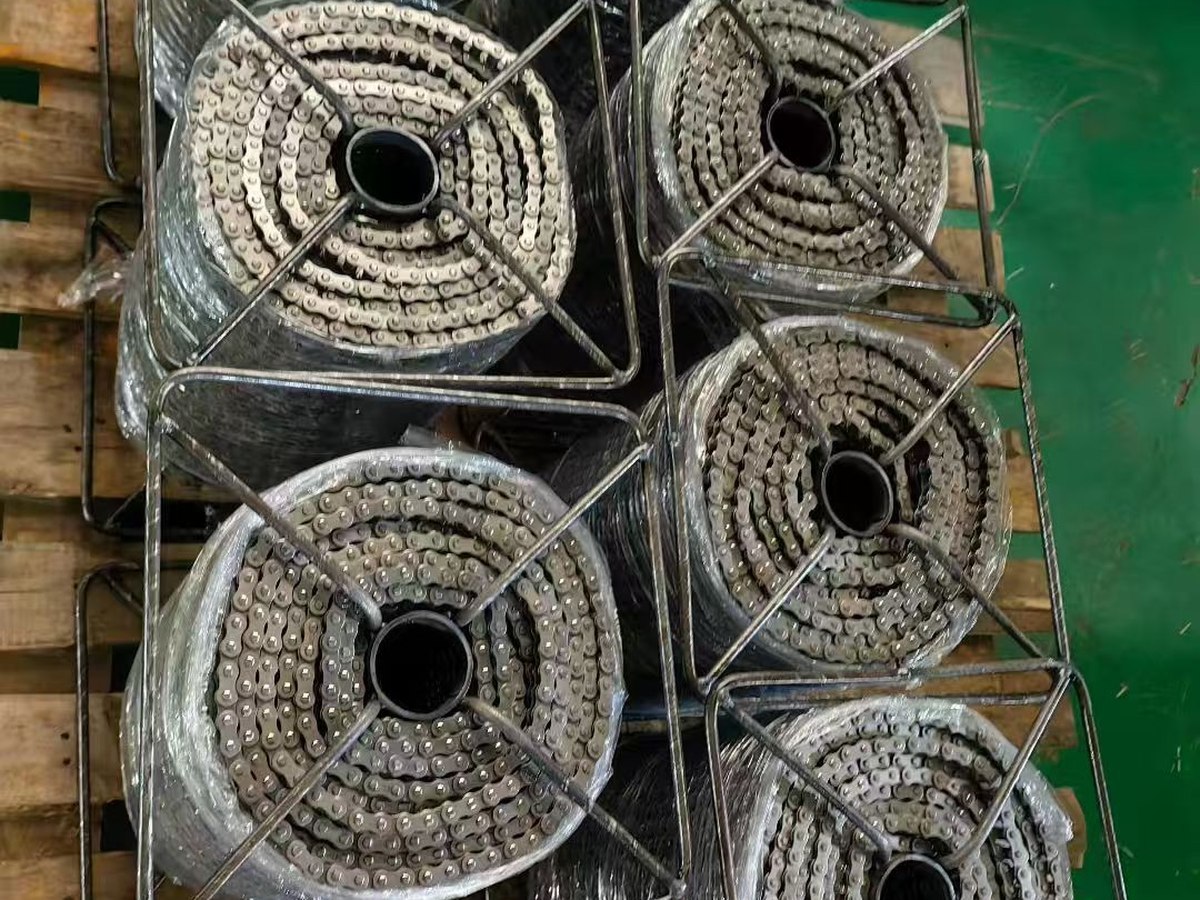
The unit of packing for roller chain is the coil, not the box. Each coil is made up to the link count on the order, then either wound into a steel wire basket that holds its shape under its own weight, or wrapped directly where the coil is lighter. The basket matters more than it looks: a heavy coil that is only film wrapped will settle and deform in transit, and a deformed coil is difficult to run out on a take-up without kinking.
Packing for a long sea transit
Sea freight exposes packed chain to weeks of humidity and to condensation as the container cycles between cold nights and warm days. The film wrap keeps bulk water off the load, but it also traps whatever moisture was on the chain when it was packed. That is why chain is packed dry, and why the wrap is applied tight and sealed at the base of the pallet rather than left open at the bottom where water can pool.
Cartons, marks and identification
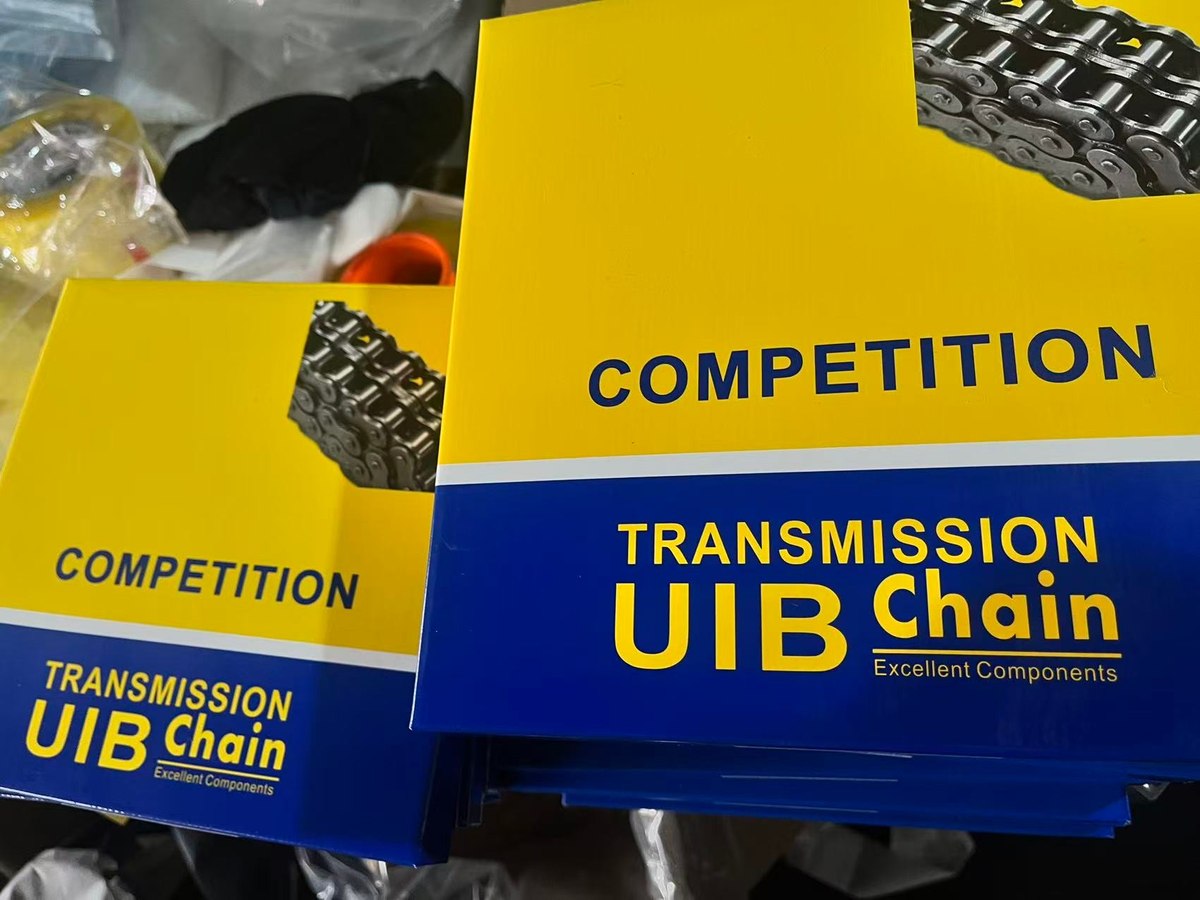
Chain supplied in cartons is packed in the branded carton shown below, carrying the product designation alongside the brand. The marks on each pallet are matched to the packing list line by line, so a specific size can be found at goods-in without breaking open every pallet. On a mixed order that is the difference between a clean receiving check and an afternoon with a knife and a clipboard.
Documents that travel with the order
A standard export set accompanies the load: commercial invoice, packing list, and the bill of lading issued by the carrier. Where the buyer’s customs broker asks for additional origin or inspection documents, those are prepared before the load is released rather than after it sails, because a document that arrives late holds the container at destination.
What the buyer receives
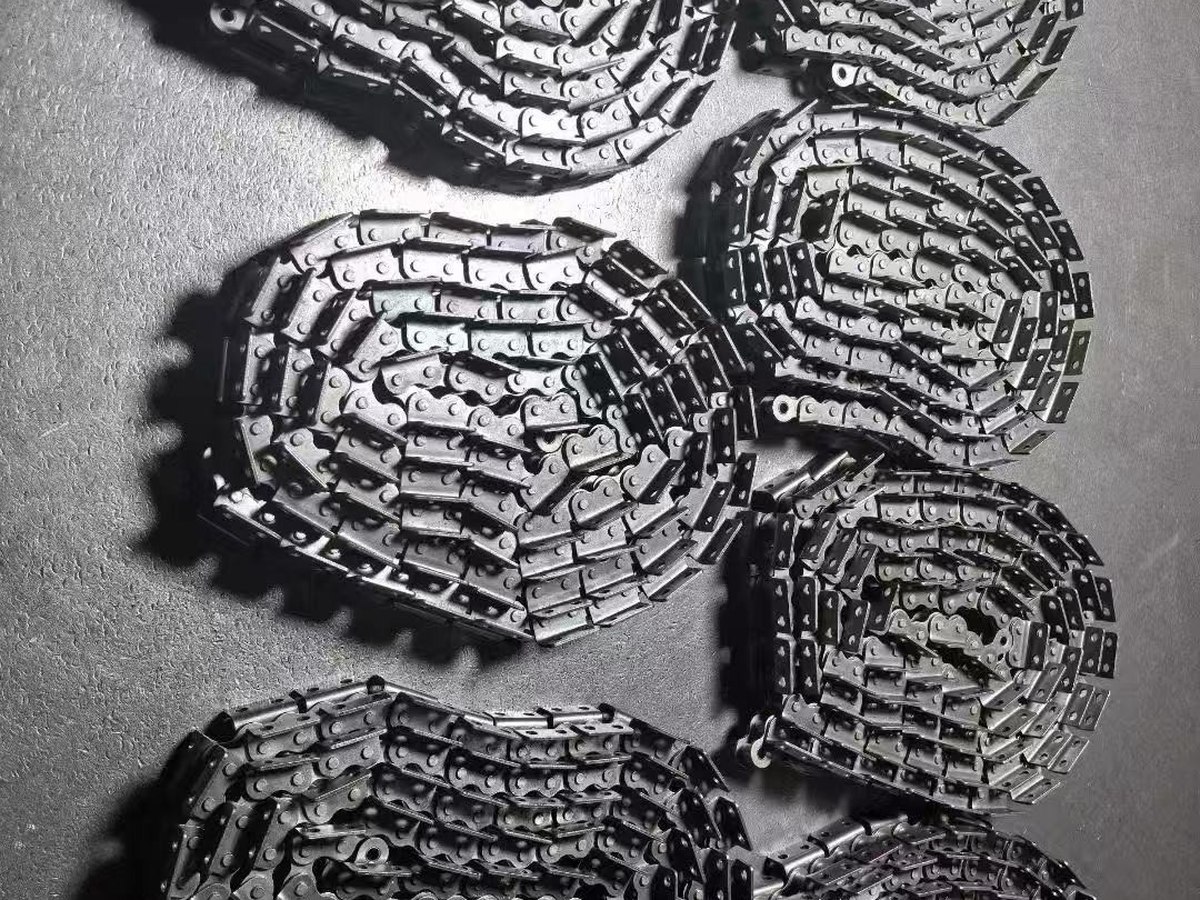
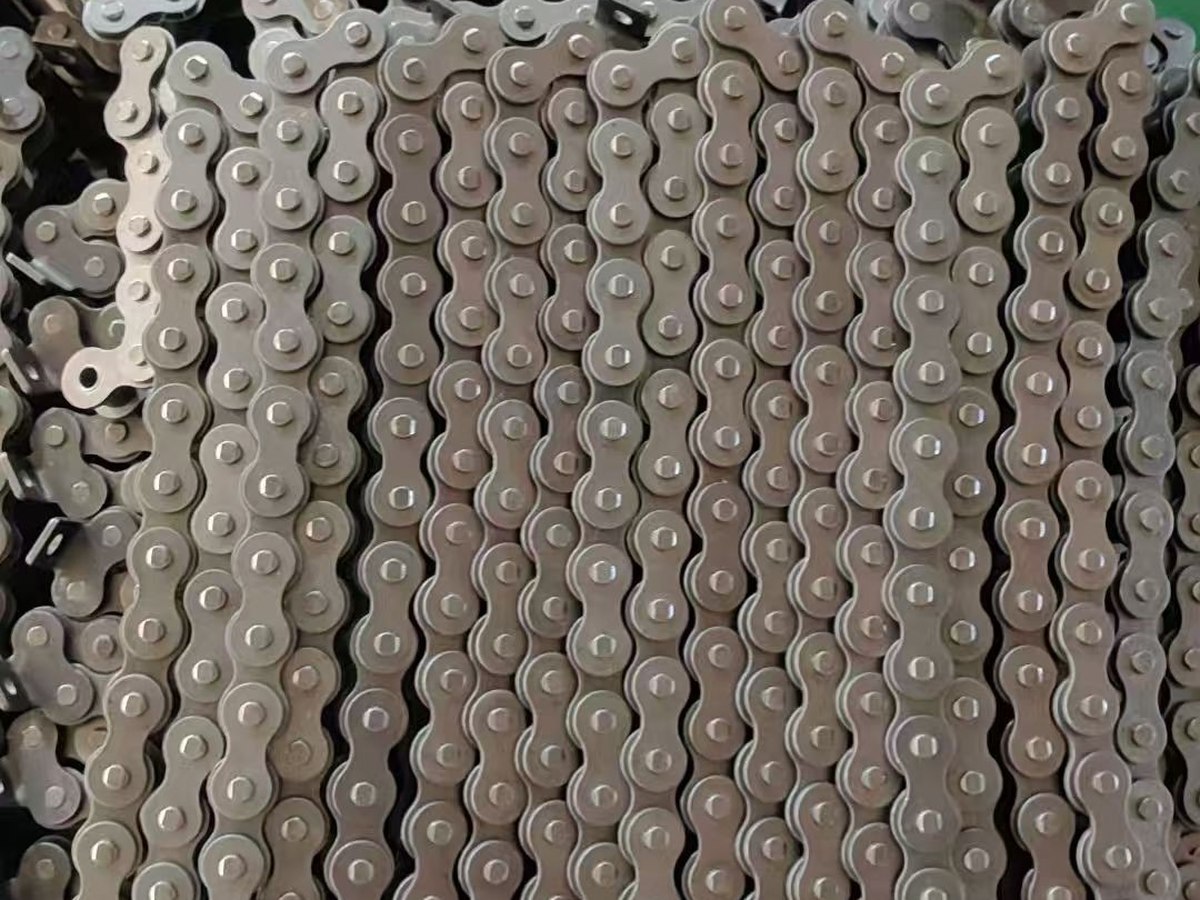
Chain arrives cut to the ordered length and coiled, with connecting links packed alongside so a run can be joined on site without a second shipment. Where the order includes sprockets or attachments, they are packed and marked with the same line references as the chain, so the two are not separated at receiving.
Deciding the packing at quotation stage
Export packing is not a detail to settle at the end of an order. Pallet size and height, maximum coil weight for the receiving forklift, and whether the load has to be unloaded by hand all change how the chain is packed, and they are cheapest to accommodate before the chain is coiled. If you are planning a delivery to the United States, tell us the pallet configuration and the receiving constraints with your enquiry and we will pack to them.
Our industrial roller chain range covers ANSI and ISO (BS/DIN) series in single and multi-strand construction. To discuss an export order, contact our sales team with the sizes, lengths and delivery address.